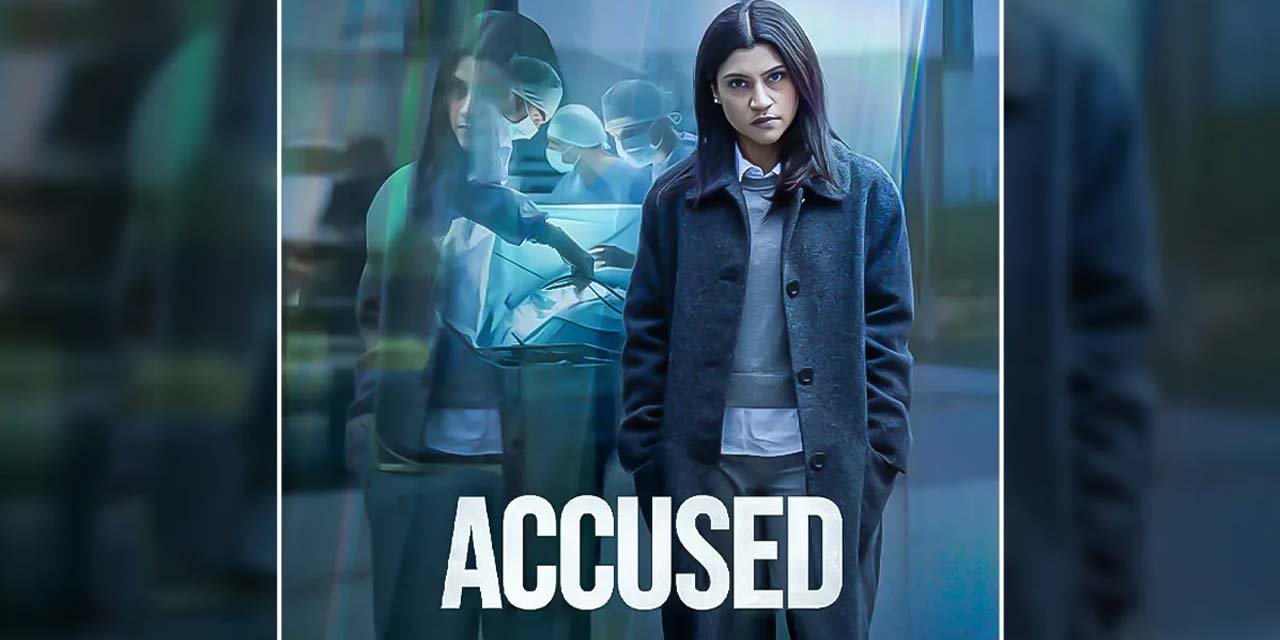

For Womentainment, Accused isn’t just another psychological drama with a new take on #MeToo. This is a narrative grenade rolled gently into a space that has long been dominated by one archetype: the powerful male doctor, the whispered allegations, the unraveling wife at home.
With Accused, Netflix flips the lens.
Well, to a point, anyway, as we do wind up with another trope: The lesbian predator. Whether the queer doctor in Accused is truly a predator is the question waiting to be answered. In many ways, this is reminiscent of Tár, starring Cate Blanchett. Only, instead of a conductor, this time the woman is a doctor. A gynecologist, no less.
Also, this plays out in the UK, but it’s an Indian Netflix production, and much is in Hindi (unless you choose a dubbed version, which I never recommend).
Directed by Anubhuti Kashyap and starring Konkona Sensharma and Pratibha Rannta, Accused centers on Dr. Geetika Sen, a celebrated surgeon accused of sexual misconduct. But here’s the tectonic shift: she is married to a woman.
And that changes everything.
When the “Accused” Isn’t a Man
Stories about sexual misconduct have a familiar silhouette. A powerful man. A younger woman. A wife in the shadows.
Accused disrupts that silhouette.
Geetika is not the usual suspect. She is a woman in power. A surgeon and gynecologist. A spouse in a same-sex marriage. A figure of authority in a profession built on trust and bodily autonomy. When allegations surface, the narrative doesn’t just question her innocence. It interrogates our assumptions.
Because when the accused is a woman, especially a lesbian woman, the cultural script glitches.
Society often frames women as default victims, not perpetrators. Queer women, in particular, are frequently desexualized or romanticized in media. Well, with the “lesbian predator” trope, which is thankfully a thing of the past.
For the most part, as here it becomes a theme yet again… but not in a bad way, per se.
Otherwise, we are now seen more as lovers, artists, or rebels. Rarely are we depicted as figures capable of crossing ethical lines in positions of institutional power.
That discomfort is the real psychological thriller here.
A Lesbian Marriage Under Scrutiny
The emotional core of the film lies not only in public judgment but in private fracture. Geetika’s marriage to Dr. Meera becomes a pressure chamber. Trust is no longer automatic. Loyalty is no longer pure. Love is forced to coexist with doubt.
And this matters.
Queer relationships in mainstream Indian cinema have often been framed as fragile blossoms fighting societal prejudice. The conflict typically comes from outside: family rejection, legal barriers, and cultural stigma.
In Accused, the conflict erupts from within. However, again, Accused also deals with those other issues. Not least, as the women are both from India, but are living freely in the UK now.
The film dares to portray a lesbian marriage not as symbolic activism, not as tragedy porn, but as a complex adult relationship navigating betrayal, ambiguity, and moral uncertainty. That normalization is powerful. It says: queer couples do not exist only to represent struggle. They exist to represent humanity in all its mess.
Power, Gender, and the Double Bind
A woman in power is already navigating a tightrope. A lesbian woman in power carries even more invisible weight.
If Geetika is innocent, is she being judged more harshly because she defies expectations? If she is guilty, does that complicate feminist narratives that center women primarily as victims?
The film does not rush toward clarity, and that restraint is strategic. As Kashyap has said, the story resists easy answers. It lingers in ambiguity, forcing audiences to confront their own biases.
And perhaps the most radical move is this: Accused does not sanitize its queer protagonist. It does not make her morally pure to earn audience sympathy. It allows her to be complicated.
That alone feels like progress.

Why The 2026 Netflix Accused Story Matters Now
In global conversations around #MeToo and workplace accountability, queer dynamics are often underexplored. Power does not disappear simply because both parties are women. Consent does not become uncomplicated because gender binaries blur.
By centering a lesbian doctor accused of misconduct, Accused widens the discourse. It acknowledges that abuse of power is about hierarchy, not just gender. It challenges audiences to think beyond the familiar villain archetype.
And crucially, it does so without turning the queer relationship into spectacle. Again, this was also covered in Tár, but with the 2026 Netflix movie Accused, there is the added pressure of the accused woman being a queer person of color.
A New Chapter for Queer Representation on Netflix?
Dharma Productions has backed a story that feels quietly disruptive. Rather than building drama through sensational courtroom theatrics, the film appears to rely on emotional stillness, silence, and psychological tension.
The result is a rare thing: a queer-centered story that isn’t about coming out, isn’t about homophobia, isn’t about forbidden love. It’s about power. Trust. Reputation. And the terrifying space between truth and perception.
In a media landscape that often flattens queer women into symbols, Accused gives us something more unsettling and more honest.
A protagonist who is not a stereotype.
A marriage that is not ornamental.
A story that asks us who we believe and why.
And perhaps the boldest question of all:
When the accused is a woman, are we ready to look at her the same way?
Don’t Expect Too Much Affection from Accused (2026)
For queer women expecting to see the married couple being a married couple in a physical sense, there will be disappointment. On the one hand, I acknowledge that this isn’t the point of the story. On the other hand, you would never have seen a straight married couple interact with so little physical romance shown on screen.
So, make sure you set your expectations accordingly to avoid disappointment. A good follow-up movie could be I Can’t Think Straight. Just to see a wonderful love story play out in a similar setting and circumstances.
You can watch the movie Accused on Netflix from February 27, 2026.